
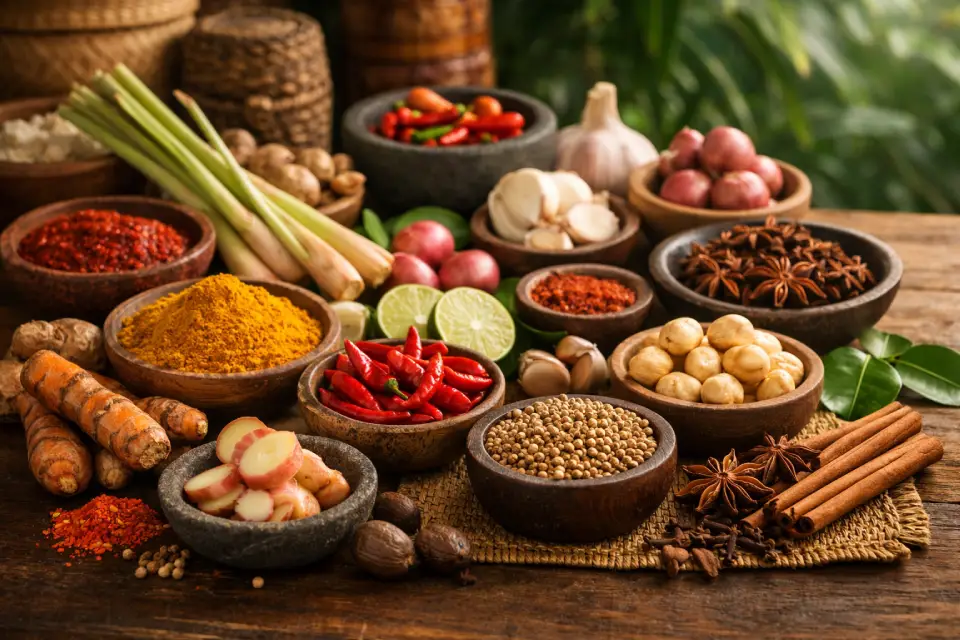
Indonesian Spices for Beginners: Flavor Guide
Table of Contents
Indonesian spices for beginners can feel overwhelming at first. The country’s cuisine is known for its depth, warmth, and layered aromas, but understanding the spices behind those flavors makes everything clearer.
This guide is designed to help you recognize the main Indonesian spices, understand how they taste, and identify them in real dishes.
Rather than focusing on recipes or restaurant specialties, this article explains flavor profiles in a simple and practical way. Once you understand the building blocks, every Indonesian dish becomes easier to decode.
If you’d like to explore these flavors further, this Indonesian spices for beginners is a helpful starting point for key aromatics and how they’re used.
Indonesian spices for beginners: understanding the flavor foundations
Indonesian spices for beginners often start with a simple question: why do Indonesian dishes taste so complex?
The answer lies in layering. Instead of one dominant spice, Indonesian cuisine blends multiple aromatics to create balance between:
- Warmth
- Sweetness
- Earthiness
- Freshness
- Heat
The key is not intensity, but harmony.
Let’s explore the most common spices and how they actually taste.
Turmeric: warm, earthy, slightly bitter
Turmeric is one of the easiest spices to recognize thanks to its bright golden color. In flavor, however, it is subtle.
Taste profile:
- Earthy
- Mildly bitter
- Warm, but not spicy
Turmeric provides depth rather than heat. It forms the base of many Indonesian spice pastes (bumbu). When you enjoy dishes served at a restaurant in Jimbaran with ocean view, that golden tone in rice or sauce often comes from turmeric.
For Indonesian spices for beginners, turmeric is the anchor spice—the one that quietly supports everything else.
Galangal: fresh, citrusy, and sharp
Galangal is often confused with ginger, but its flavor is quite different.
Taste profile:
- Citrusy
- Pine-like
- Peppery and slightly sharp
Unlike ginger, galangal feels brighter and less sweet. It brings freshness to soups and coconut-based sauces.
In many Balinese dishes, galangal prevents richness from becoming too heavy. Once you recognize its slightly medicinal aroma, you’ll start noticing it everywhere.
For Indonesian spices for beginners, galangal is the spice that adds lift and clarity.
Lemongrass: aromatic and lemony without acidity
Lemongrass does not taste like lemon juice. It has no sourness, only fragrance.
Taste profile:
- Floral citrus aroma
- Light sweetness
- Clean herbal finish
It is often bruised and infused into broths, curries, or grilled dishes. When paired with seafood, like in menus highlighted in a fish restaurant in Jimbaran with ocean view, lemongrass enhances freshness without overpowering the natural flavor.
Understanding lemongrass is essential for mastering Indonesian spices for beginners, because it explains why many dishes feel aromatic rather than spicy.

Coriander seed: nutty and warm
Ground coriander seed is frequently used in spice blends.
Taste profile:
- Mildly sweet
- Nutty
- Slight citrus undertone
It rounds out sharper spices like galangal or chili. Coriander creates comfort—it softens intensity.
In grilled meats or marinades, coriander helps balance heat and depth. For Indonesian spices for beginners, coriander is the bridge between spice and sweetness.
Candlenut: creamy and thickening
Candlenut is less about flavor and more about texture.
Taste profile:
- Mild
- Slightly fatty
- Creamy
It is ground into spice pastes to create body. When sauces feel smooth and cohesive, candlenut is often responsible.
Beginners sometimes overlook it because it is not aromatic—but structurally, it is essential in Indonesian spice bases.
Chili: controlled heat, not just fire
Chili in Indonesia varies widely. Heat levels can range from mild warmth to intense spice.
Taste profile:
- Fresh heat
- Fruity sharpness
- Lingering warmth
The key for Indonesian spices for beginners is understanding that chili is rarely used alone. It is balanced with turmeric, coriander, garlic, and shallots to create complexity.
Heat should enhance—not dominate—the flavor profile.
Clove and cinnamon: sweet warmth
Indonesia is historically known as part of the “Spice Islands,” and cloves play a major role.
Taste profile (clove):
- Intense
- Sweet
- Slightly medicinal
Taste profile (cinnamon):
- Warm
- Sweet
- Comforting
These spices appear in stews and festive dishes, adding depth rather than dessert sweetness. When exploring broader culinary themes, including articles such as the culinary specialties of The View, you may notice how subtle sweet spices balance savory components.
For Indonesian spices for beginners, clove and cinnamon demonstrate how sweetness can enhance savory food.
How Indonesian spice blends create balance
What makes Indonesian cuisine unique is not one spice—but the combination.
A typical base paste (bumbu) might include:
- Turmeric
- Galangal
- Lemongrass
- Coriander
- Garlic
- Shallots
- Chili
- Candlenut
Individually, these flavors are simple. Together, they create something layered and harmonious.
For Indonesian spices for beginners, the goal is not memorization—it’s recognition. When tasting a dish, ask:
- Is the warmth earthy (turmeric)?
- Is there citrus freshness (galangal or lemongrass)?
- Is the heat sharp or rounded?
- Is the texture creamy from candlenut?
The more you identify these elements, the more confident your palate becomes.
Discover Indonesian flavors at The View Bali
Understanding Indonesian spices for beginners transforms the way you experience food. Once you recognize the flavor building blocks, every dish tells a clearer story.
At The View Bali, our cuisine reflects Indonesia’s rich spice heritage while presenting it in a refined and accessible way. Whether you are discovering Indonesian flavors for the first time or deepening your appreciation, tasting dishes in a cliffside setting adds a sensory dimension that goes beyond theory.
If you would like to explore Indonesian spices through real dishes and ocean-view dining, we invite you to reserve your table at The View Bali and experience these flavors firsthand.
FAQ – Indonesian Spices for Beginners
What are the most important Indonesian spices to know as a beginner?
If you’re just starting out, focus on turmeric, galangal, lemongrass, coriander seed, candlenut, chili, clove, and cinnamon. These spices form the foundation of many traditional Indonesian spice blends.
Are Indonesian spices always very spicy?
No. Indonesian cuisine is not only about heat. Flavor balance is key. While chili is common, it is usually combined with aromatic and earthy spices to create harmony rather than overwhelming spiciness.
What is the difference between galangal and ginger?
Galangal has a sharper, more citrusy and slightly pine-like flavor, while ginger is warmer and sweeter. Although they look similar, their taste profiles are quite distinct in Indonesian cooking.
Why do Indonesian dishes taste so complex?
The complexity comes from layering multiple spices together. Instead of one dominant flavor, Indonesian dishes combine warmth, freshness, sweetness, and heat to create depth and balance.
Is candlenut used for flavor?
Candlenut is not strongly aromatic. It is mainly used to thicken and add a creamy texture to spice pastes and sauces, helping bind the flavors together.
How can I recognize Indonesian spices in a dish?
Look for clues such as the golden color of turmeric, the citrus aroma of lemongrass or galangal, the round sweetness of coriander, or the gradual warmth of chili. With practice, these elements become easier to identify.
Do I need to cook to understand Indonesian spices?
Not necessarily. Tasting dishes prepared with traditional spice blends is one of the best ways to train your palate and begin recognizing how different spices interact in real meals.





One Comment